

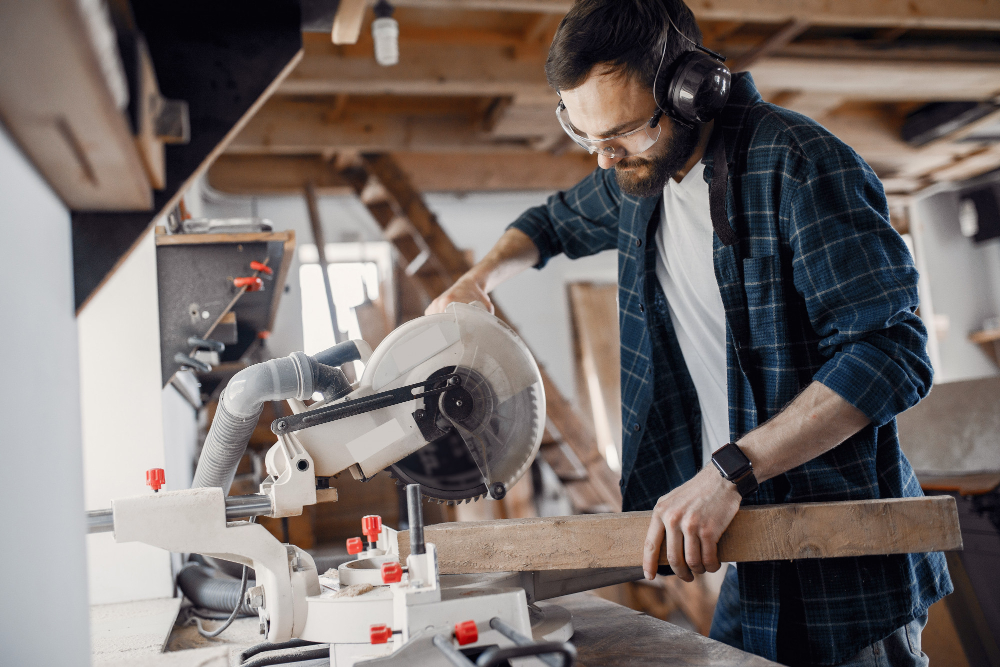
In many UK joinery workshops, wood waste is still treated as a cost centre rather than a recoverable asset. Rising skip hire fees, stricter environmental regulations, and increasing timber prices are placing direct pressure on margins. If your operation is producing consistent volumes of sawdust, shavings, and offcuts, you are likely paying twice: once for material that is not fully utilised, and again for its disposal.
At IW Machines, we have worked with UK joinery and woodworking businesses for over 50 years, helping manufacturers improve efficiency through high-performance machinery solutions. In our experience, wood waste is one of the most overlooked cost areas in a workshop, yet it offers one of the fastest opportunities for measurable cost recovery when managed correctly.
This is where briquette machines provide a clear commercial advantage. By converting loose wood waste into high-density fuel briquettes, workshops can reduce disposal costs, generate an additional revenue stream, and improve overall operational efficiency.
What is a Briquette Machine in a Woodworking Context?
A briquette machine is a mechanical press that compresses wood waste such as sawdust and shavings into compact, uniform blocks. These briquettes are dense, low-moisture fuel units that can be used for heating or sold commercially.
If you are exploring solutions, you can view our range of briquette machines designed for UK workshop environments.
Unlike loose waste, which is inefficient to store and costly to dispose of, briquettes offer:
- Higher calorific value
- Reduced storage volume
- Lower moisture content
- Consistent combustion performance
For workshops already operating extraction systems, briquetting integrates directly into the waste stream, converting by-products into usable fuel without additional processing steps.
The Real Cost of Wood Waste in UK Workshops
Wood waste is often underestimated in production costing. However, when analysed properly, it becomes a significant drain on profitability.
Key cost factors include:
- Skip hire and disposal costs
Typical UK costs range from £150 to £300 per skip, often with multiple collections per month. - Lost raw material value
Premium timbers such as oak or Accoya represent a high cost per cubic metre. Offcuts and dust reflect unrealised value. - Labour and handling time
Time spent managing waste reduces time available for production. - Environmental compliance pressure
UK regulations are increasingly focused on sustainable waste management practices.
For a mid-sized workshop, these combined costs can easily exceed several thousand pounds per year.
Turning Waste into a Revenue Stream
The primary advantage of briquette machines is their ability to convert waste into a saleable product.
UK market value of briquettes
Wood briquettes are widely used in:
- Biomass heating systems
- Domestic wood burners
- Commercial heating applications
Typical resale values range between £250 and £350 per tonne, depending on quality and demand.
For workshops producing 1 to 2 tonnes of briquetted waste per month, this can generate £3,000 to £8,000 annually.
Alternatively, many workshops use briquettes internally to reduce heating costs, particularly during winter months when energy demand is higher.
Efficiency Gains Beyond Revenue
While revenue generation is important, briquetting also improves overall workshop efficiency.
1. Waste Volume Reduction
Briquette machines compress waste volume by up to 90 percent, resulting in:
- Fewer skips required
- Reduced storage space
- Lower collection frequency
2. Improved Workshop Organisation
Loose dust and shavings create clutter and inefficiencies.
By converting waste into uniform briquettes:
- Workshop cleanliness improves
- Handling becomes simpler
- Fire risks associated with airborne dust are reduced
Integration with dust extraction systems ensures a continuous and controlled waste flow.
3. Labour Reallocation
Automating waste handling allows operators to focus on higher-value tasks such as machining and assembly, rather than manual clean-up and disposal.
Where Briquetting Delivers the Most Impact in UK Workshops
Briquetting systems are particularly effective in operations with consistent waste output.
High-impact applications include:
- Timber window and door manufacturers
Large volumes of planing and machining waste - Furniture production workshops
Continuous generation of fine dust and offcuts - CNC-based production environments
High material throughput with consistent waste streams
If your workshop is already using CNC machining centres for windows and doors, briquetting becomes a natural extension of an efficient, optimised workflow.
ROI: How Quickly Does a Briquette Machine Pay for Itself?
Return on investment depends on waste volume, disposal costs, and usage of briquettes.
Example: Mid-sized UK workshop
- Monthly waste: 3 tonnes
- Skip cost: £200 per collection, 4 per month = £800
- Annual disposal cost: £9,600
After installing a briquette machine:
- Skip usage reduced by up to 80 percent
- Disposal costs reduced to approximately £2,000 annually
- Briquette sales generate £6,000 to £10,000 annually
Combined financial benefit:
- Cost savings: ~£7,600
- Additional revenue: up to £10,000
- Total impact: £15,000 to £18,000 per year
Typical payback period: 12 to 24 months
Sustainability and Compliance Advantages
Sustainability is becoming a key requirement for UK manufacturers.
Briquette machines support this by:
- Reducing landfill waste
- Supporting circular manufacturing practices
- Lowering overall carbon footprint
They also contribute to compliance with UK Health and Safety Executive guidelines by improving dust management and reducing airborne particles.
Integration with Existing Workshop Systems
Modern briquette machines are designed to integrate seamlessly with standard dust extraction setups.
Key integration considerations:
- Material feed
Direct connection from extraction units ensures continuous operation. - Power requirements
Typically compatible with standard 3-phase workshop supply. - Footprint
Compact designs allow installation within existing layouts without major disruption. - Maintenance
Routine servicing is minimal, usually involving periodic cleaning and hydraulic checks.
This makes implementation straightforward, even for workshops without prior automation in waste handling.
Strategic Impact on Your Business
Briquetting is not just a cost-saving measure. It is a shift in how workshops approach resource efficiency.
By treating waste as a by-product with value rather than a disposal problem, businesses can:
- Improve gross margins
- Reduce operational inefficiencies
- Strengthen sustainability credentials
- Create a more resilient production model
For UK joinery firms facing rising input costs and labour constraints, this represents a practical and scalable improvement.
Why Source Briquette Machines from IW Machines?
Investing in briquetting equipment is not just about the machine itself. It requires the right technical setup to deliver consistent results.
At IW Machines, we bring over 50 years of industry experience supporting UK woodworking businesses.
We provide:
- Technical assessment of your waste output and workflow
- Integration with existing extraction systems
- Reliable machinery from proven manufacturers
- Ongoing UK-based support and servicing
Our approach is focused on ensuring your investment delivers measurable returns, not just equipment installation.
Conclusion
Briquette machines offer a clear and measurable opportunity for UK workshops to turn an ongoing cost into a profitable asset. By reducing waste disposal expenses, generating additional revenue, and improving operational efficiency, they deliver both short-term financial gains and long-term strategic value.
In an environment where margins are tightening and sustainability is under scrutiny, adopting briquetting technology is not simply an upgrade. It is a commercially sound decision grounded in efficiency, cost recovery, and resource optimisation.
Frequently Asked Questions
Briquette machines can process sawdust, wood shavings, and small offcuts from both hardwood and softwood. Materials should be relatively dry, typically below 15 percent moisture content, to ensure proper compression and briquette quality.
No. Most systems are designed for automated or semi-automated operation. Once connected to your extraction system, the machine processes waste continuously with minimal operator input.
Yes. Demand is stable due to widespread use in domestic heating and biomass systems. With increasing energy costs, briquettes are becoming a preferred alternative fuel source, particularly in rural and off-grid areas.
Yes. Many workshops use briquettes to fuel biomass boilers or wood burners, reducing heating costs during colder months and improving overall energy efficiency.