

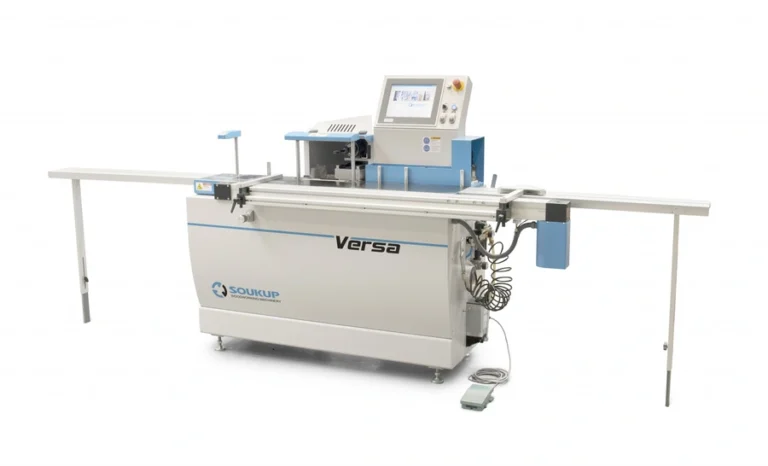
The UK joinery sector is facing a structural labour challenge. Skilled bench joiners are becoming increasingly difficult to recruit, apprenticeship pipelines are not keeping pace with demand, and wage inflation continues to put pressure on already tight margins. For many workshops, the issue is no longer about growth. It is about maintaining consistent output without compromising quality.
If your production schedule is dependent on a small number of highly experienced operators, you are exposed to risk. Absenteeism, staff turnover, or increased workload can quickly create bottlenecks across machining, assembly, and finishing stages. This is where CNC automation is shifting the operational model. It reduces reliance on scarce manual expertise while maintaining, and often improving, production standards.
Understanding the Skilled Labour Shortage in UK Joinery
The shortage of skilled labour is not a short-term fluctuation. It is a long-term industry trend driven by several factors:
- Ageing workforce
A significant proportion of experienced joiners are approaching retirement age, with insufficient replacements entering the trade. - Decline in apprenticeships
Training programmes exist, but uptake remains below the level required to sustain industry demand. - Increased construction demand
Housing targets and renovation projects are increasing pressure on timber window and door manufacturers. - Rising wage costs
Skilled operators command higher salaries, increasing production costs per unit.
For a typical UK joinery workshop, these factors translate into longer lead times, inconsistent output, and reduced capacity to take on new projects.
The Limitations of Traditional Workshop Models
Traditional joinery relies heavily on manual processes and operator experience. Tasks such as profiling, mortising, tenoning, and routing require precision developed over the years.
However, this model introduces clear constraints:
- Inconsistent quality due to manual variation
- Long training periods for new staff
- Limited scalability without increasing headcount
- Higher risk of rework and material waste
Even highly skilled teams face production ceilings. Output is directly tied to operator availability and experience.
What is CNC Automation in Joinery?
CNC, or Computer Numerical Control, refers to machinery that uses programmed instructions to automate cutting, shaping, and drilling processes.
In a modern workshop, CNC automation integrates:
- CAD design software
- CAM programming systems
- Multi-axis machining centres
This creates a continuous workflow where designs are translated directly into machine operations without manual interpretation.
If you are evaluating machinery options, explore our range of CNC Machining Centres for Windows & Doors designed specifically for UK joinery production requirements.
How CNC Automation Reduces Dependence on Skilled Labour
1. Standardising Complex Processes
CNC machines remove variability from tasks that traditionally require expert judgment.
Operations such as:
- Lock case routing
- Hinge recessing
- Mortise and tenon cutting
- Profile machining
are executed with programmed precision. Once configured, every component is produced to identical specifications.
For workshops handling multiple profiles, integrating CNC with four-sided planers ensures consistent upstream material preparation before machining.
2. Shortening the Learning Curve for Operators
Traditional joinery requires years of experience. CNC systems are designed with intuitive interfaces that reduce this barrier.
With structured training:
- New operators become productive within days
- Existing staff transition into machine supervision roles
- Dependency on a limited-skilled workforce is reduced
This enables workshops to maintain output even during labour shortages.
3. Increasing Output Without Increasing Headcount
CNC automation directly impacts throughput.
UK workshops implementing CNC machining centres report:
- 50 to 75 percent increase in production capacity
- Up to 40 percent reduction in lead times
- Improved workflow consistency across machining stages
Material flow can be further optimised when combined with optimising cross-cut saws, which reduce manual intervention at the preparation stage.
4. Reducing Rework and Material Waste
Manual errors are a major source of inefficiency.
Even small inaccuracies can lead to:
- Misaligned joints
- Poor fit
- Material wastage
- Time-consuming rework
CNC machines operate within tolerances as tight as 0.1mm, ensuring first-time accuracy.
To further improve finishing precision, many workshops integrate industrial sanders into the production line, reducing manual finishing time.
Real Impact on UK Workshop Operations
The shift to CNC automation is not just about replacing labour. It is about restructuring the workflow.
Before automation:
- Skilled joiners perform repetitive machining tasks
- Production speed varies based on operator experience
- Bottlenecks occur at high-skill stages
After automation:
- CNC handles repetitive and precision machining
- Skilled joiners focus on assembly, finishing, and quality control
- Workflow becomes predictable and scalable
This reallocation of labour ensures that expertise is used where it adds the most value.
ROI: The Financial Case for CNC Automation
Investing in CNC machinery is a capital decision, but the financial returns are measurable.
Typical investment range in the UK:
- £120,000 to £400,000 depending on configuration
Key financial benefits:
- Reduced labour cost per unit by up to 30 percent
- Increased output without proportional staffing increases
- Lower material waste, often reduced by 15 to 20 percent
- Fewer customer callbacks due to improved accuracy
Payback period:
Most UK workshops achieve ROI within 18 to 36 months, depending on production volume and utilisation.
When combined with financing options such as lease-to-own models, the transition becomes commercially viable without significant cash flow strain.
Addressing the Skills Gap Without Replacing Craftsmanship
A common concern is that automation removes the craftsmanship associated with joinery. In practice, the opposite is true.
CNC automation:
- Handles repetitive, labour-intensive machining
- Frees skilled joiners to focus on complex, high-value tasks
- Improves consistency across all products
The role of the joiner evolves from manual operator to production specialist. This shift enhances both job satisfaction and output quality.
Integration with Existing Workshop Setup
CNC systems are designed to integrate with existing machinery rather than replace it entirely.
Typical integration includes:
- Linking CAD designs directly to machining centres
- Positioning CNC units within existing workflow layouts
- Retaining manual machines for secondary operations
This allows a phased transition while maintaining ongoing production.
Future Outlook for UK Joinery Workshops
The labour shortage is expected to persist. At the same time, customer expectations around quality, lead times, and sustainability are increasing.
CNC automation provides a practical response to these pressures by:
- Ensuring consistent production regardless of workforce constraints
- Supporting compliance with modern building standards
- Enabling workshops to scale without operational instability
Workshops that adopt automation are better positioned to compete in a demanding and evolving market.
Conclusion
The skilled labour shortage in UK joinery is a long-term structural challenge that cannot be resolved through recruitment alone. CNC automation provides a practical and scalable solution by reducing reliance on hard-to-find skills, improving production consistency, and increasing overall workshop efficiency.
At IW Machines, we support UK joinery businesses in making this transition with confidence. With over 50 years of experience in woodworking machinery, we assess your current workflow, identify production bottlenecks, and recommend CNC solutions tailored to your specific requirements. From initial consultation through to installation and ongoing technical support, our focus is on delivering measurable improvements in output, accuracy, and long-term reliability.
If your workshop is facing capacity constraints due to labour shortages, adopting CNC automation is not just an upgrade. It is a strategic investment in operational stability, productivity, and future growth.
Frequently Asked Questions
No. CNC machines reduce reliance on manual machining skills but still require experienced joiners for assembly, finishing, and quality control. The technology supports skilled workers rather than replacing them.
Most operators can achieve basic proficiency within a few days, with full operational confidence typically reached within a few weeks, depending on the complexity of the machinery.
Yes. CNC systems are highly flexible and can produce one-off components as easily as batch production. The software adjusts tool paths automatically based on design inputs.
Yes. Many CNC systems are scalable and available in configurations suited to smaller workshops. Entry-level machines allow gradual adoption without significant disruption.