

The UK fire door manufacturing sector is under increasing pressure to deliver higher production volumes without compromising precision, safety, or compliance. Rising labour costs, tighter lead times, and growing demand for certified fire door solutions are forcing manufacturers to rethink traditional production methods.
For many joinery businesses, manual machining processes are becoming a bottleneck. Inconsistent tenon accuracy, extended setup times, and reliance on highly skilled operators can slow production and create quality control challenges across the workshop floor.
This is why more UK manufacturers are investing in CNC tenoning machines to modernise workflow efficiency while maintaining the craftsmanship standards expected within the fire door industry.
At IW Machines, we have worked with UK woodworking and joinery businesses for more than 50 years, helping manufacturers improve productivity through advanced woodworking machinery solutions. One of the biggest shifts we continue to see is the move towards CNC automation in high-volume door and joinery production.
Why Precision Matters in Fire Door Manufacturing
Fire doors are highly regulated products where manufacturing consistency is critical. Every component must meet strict dimensional and structural requirements to ensure performance during fire resistance testing.
Even small inaccuracies within the machining process can affect:
- Door assembly consistency
- Hardware alignment
- Structural integrity
- Certification compliance
- Installation quality
Unlike general joinery applications, fire door production requires repeatable precision across every batch.
This is where CNC tenoning technology provides a major operational advantage.
What is a CNC Tenoning Machine?
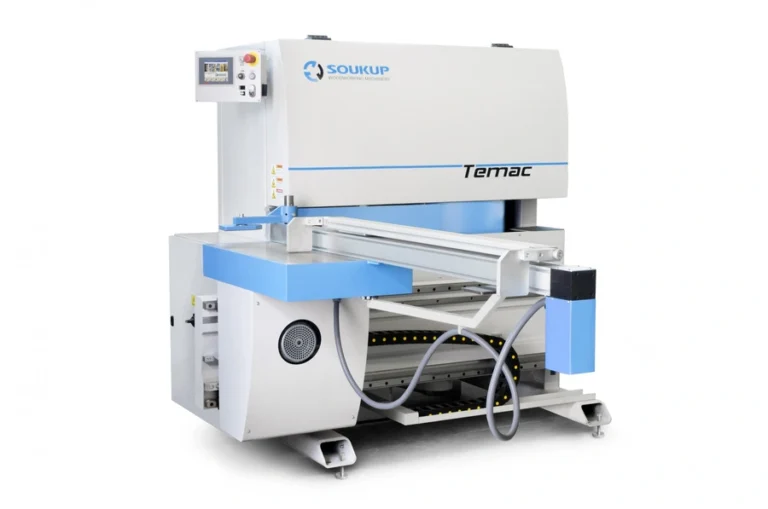
A CNC tenoning machine is designed to automate the cutting and shaping of tenons used within timber door and frame construction.
Modern CNC tenoning systems provide:
- Automated positioning
- High-speed machining
- Repeatable accuracy
- Reduced manual setup
- Consistent batch processing
For fire door manufacturers, this improves production consistency while significantly reducing reliance on manual adjustment and repetitive machining tasks.
Many manufacturers now integrate CNC machining centres for windows and doors alongside tenoning systems to create more efficient production workflows across the workshop.
The Growing Demand for Fire Door Production Efficiency
The UK construction and commercial sectors continue to place strong demand on fire door manufacturers.
At the same time, workshops are facing several operational pressures:
- Skilled labour shortages
- Increased material costs
- Rising energy prices
- Tighter project timelines
- Greater quality control expectations
Traditional machining methods can struggle to keep pace with these demands, particularly when production volumes increase.
CNC automation helps manufacturers improve throughput without compromising machining precision.
How CNC Tenoning Machines Improve Manufacturing Efficiency
1. Increased Production Speed
Manual machining processes often require repeated setup adjustments and operator intervention.
CNC tenoning systems automate much of this process, allowing manufacturers to:
- Process higher volumes consistently
- Reduce setup times
- Improve workflow continuity
- Minimise production bottlenecks
For high-volume fire door manufacturers, this directly improves operational output.
2. Greater Machining Consistency
Consistency is critical in certified fire door production.
CNC tenoning machines maintain repeatable tolerances across large production batches, reducing the risk of:
- Inconsistent joints
- Poor fitting components
- Rework requirements
- Material waste
This level of precision is difficult to maintain manually over extended production cycles.
3. Reduced Dependence on Manual Labour
The UK woodworking sector continues to experience a shortage of experienced machinists and joinery specialists.
Automation allows workshops to reduce dependency on highly manual machining processes while allowing skilled staff to focus on:
- Assembly
- Finishing
- Quality control
- Production management
This creates a more scalable production model.
4. Improved Material Efficiency
Timber costs remain a major operational concern for manufacturers.
Accurate CNC machining improves material utilisation by reducing:
- Machining errors
- Misaligned joints
- Rejected components
- Unnecessary timber waste
Many production workshops now combine automated machining processes with briquette machines to recover additional value from wood waste generated during production.
Balancing Automation with Traditional Craftsmanship
One of the biggest misconceptions surrounding CNC automation is that it replaces craftsmanship.
In reality, modern woodworking manufacturers are combining advanced CNC technology with traditional joinery expertise to improve production quality while maintaining high finishing standards.
Automation handles:
- Repetitive machining tasks
- Precision cutting
- High-volume component production
Experienced joiners continue to play a vital role in:
- Final assembly
- Finishing quality
- Product inspection
- Compliance standards
This balance between technology and craftsmanship is becoming increasingly important within the UK fire door manufacturing sector.
Real Manufacturing Investment: Sentry Doors Ltd
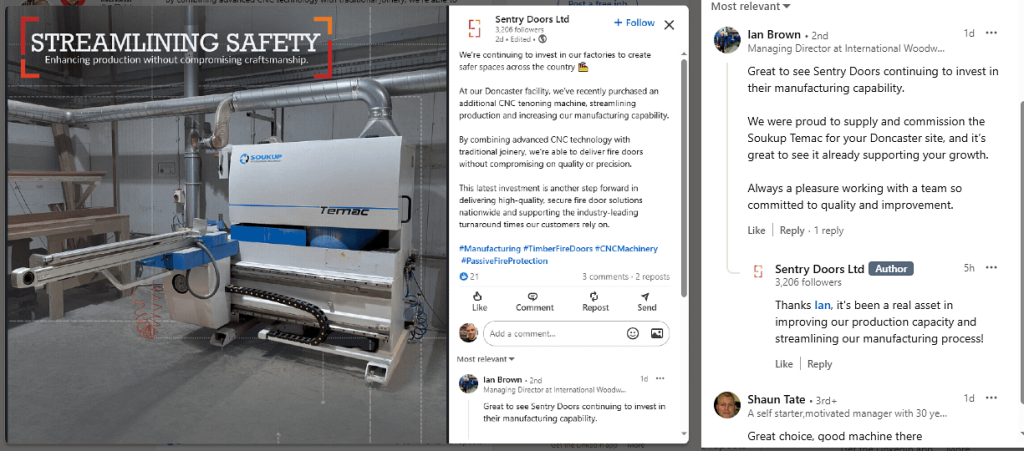
A recent example of this shift can be seen through Sentry Doors Ltd’s continued investment in manufacturing capability at their Doncaster facility.
The company recently introduced an additional CNC tenoning machine to streamline production and increase manufacturing efficiency while maintaining precision and quality standards across fire door production.
As highlighted by Sentry Doors Ltd:
“By combining advanced CNC technology with traditional joinery, we’re able to deliver fire doors without compromising on quality or precision.”
This reflects the wider direction of the UK joinery industry, where manufacturers are investing in automation not to replace craftsmanship, but to strengthen consistency, scalability, and operational reliability. At IW Machines, we were proud to supply and commission the Soukup Temac system supporting this investment in production capability.
Workflow Integration Across Modern Joinery Workshops
CNC tenoning systems rarely operate in isolation within modern manufacturing environments.
They are often integrated with:
- Cross-cut saws
- CNC machining centres
- Material handling systems
- Dust extraction systems
For workshops processing large volumes of timber components, integrating dust extraction systems helps maintain cleaner production environments while improving operational efficiency and supporting HSE compliance.
A connected workflow reduces unnecessary material handling and improves production continuity across the factory floor.
Why More UK Manufacturers Are Investing in CNC Automation
Several factors are driving increased investment in CNC woodworking machinery across the UK:
- Labour shortages
- Higher production targets
- Increased compliance expectations
- Pressure to improve lead times
- Demand for consistent product quality
For fire door manufacturers, automation is becoming less of a competitive advantage and more of an operational requirement.
Businesses investing in modern CNC technology are better positioned to maintain quality standards while scaling production efficiently.
Why Source CNC Machinery from IW Machines?
At IW Machines, we help woodworking and joinery businesses across the UK identify machinery solutions based on real production requirements.
With over 50 years of industry experience, we provide:
- Technical advice tailored to manufacturing workflow
- High-performance woodworking machinery solutions
- New and used machinery options
- Installation and commissioning support
- Ongoing technical assistance
Our focus is on helping manufacturers improve long-term operational efficiency, production reliability, and workshop productivity.
Conclusion
The UK fire door manufacturing sector is evolving rapidly as workshops face increasing pressure to improve efficiency, maintain compliance, and deliver consistent quality at scale.
CNC tenoning machines are helping manufacturers meet these challenges by improving machining accuracy, reducing production bottlenecks, and supporting more efficient workflows across the workshop floor.
At IW Machines, we continue to support woodworking businesses across the UK with advanced machinery solutions tailored to modern manufacturing requirements. With more than 50 years of experience in industrial woodworking machinery, our focus remains on helping manufacturers invest in reliable technology that improves productivity, operational efficiency, and long-term production performance.