

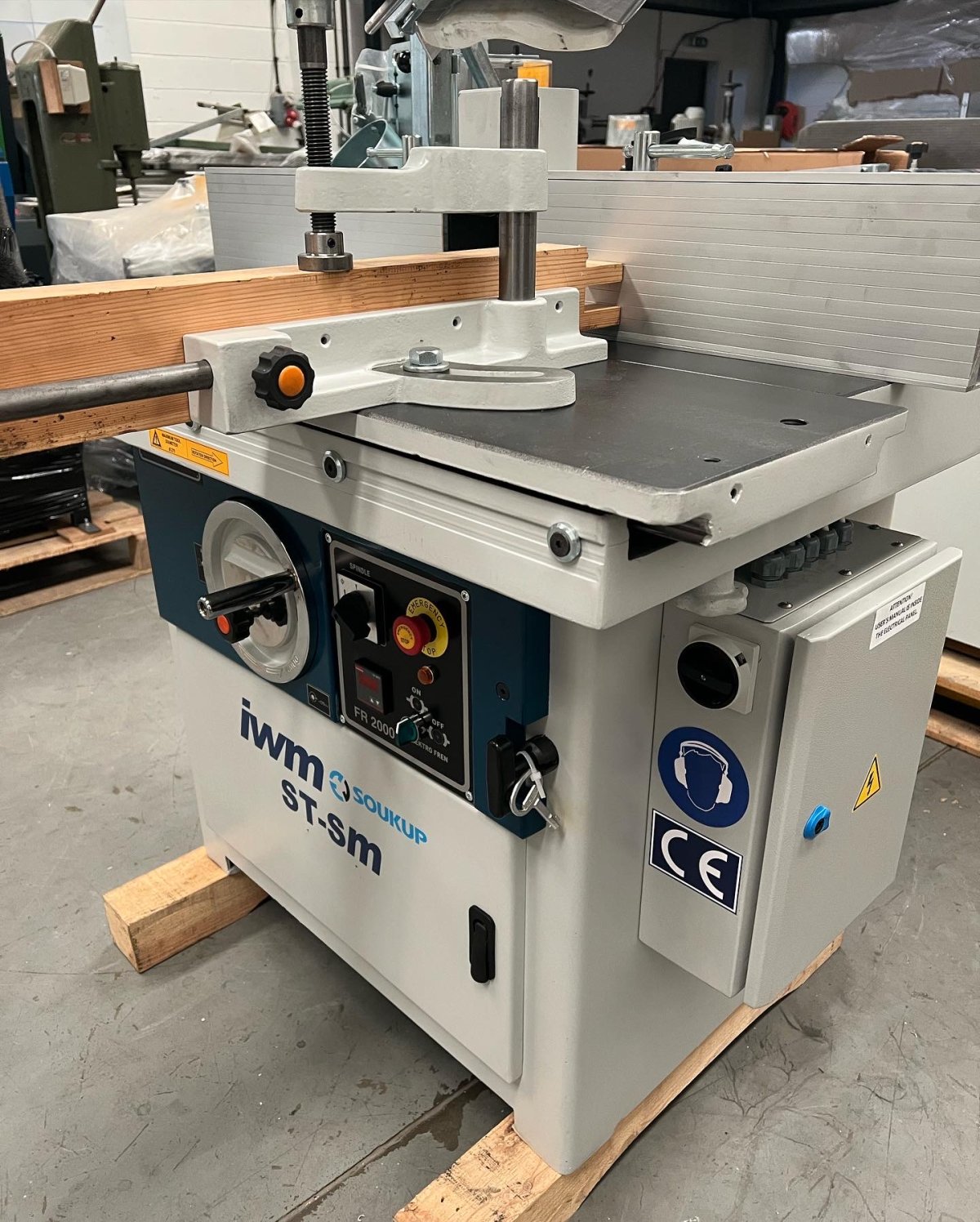
In high-volume joinery, a single millimetre of vibration in your spindle moulder doesn’t just ruin a profile; it can cost a workshop upwards of £450 in wasted timber and hourly labour before the error is even spotted. You know that maintaining a superior surface finish across 500 linear metres is an ongoing battle when older equipment struggles with tooling compatibility or inconsistent power delivery. It’s frustrating to see production stall because a machine lacks the robust engineering required for modern, intensive workflows.
This guide provides the technical roadmap to mastering your equipment, ensuring your production line achieves 99% uptime and full compliance with the latest UK Health and Safety Executive woodworking regulations. We’ll examine the engineering features that define 2026 standards, from precision-engineered fences to the integration of digital positioning for rapid, repeatable setups. By the end of this article, you’ll have the practical knowledge to eliminate downtime and secure the long-term reliability your business demands.
Key Takeaways
- Identify the critical performance differences between 30mm and 50mm spindle diameters to ensure your workshop achieves unrivalled precision in high-volume production.
- Discover why an industrial spindle moulder offers superior torque and lower cost-per-metre tooling compared to standard router tables for complex profiling tasks.
- Navigate essential UK safety compliance by understanding PUWER regulations, including the legal requirement for integrated braking systems that stop spindles within 10 seconds.
- Evaluate your production requirements to choose between manual industrial models and advanced CNC machinery for optimal workflow and energy efficiency.
- Learn how the IWM technical approach provides long-term value through precision-engineered solutions and comprehensive UK-wide maintenance support.
The Role of the Industrial Spindle Moulder in Modern Woodworking
The industrial spindle moulder stands as the definitive tool for precision profiling in the modern British workshop. At its core, it’s a vertical-axis machine that utilizes a rotating spindle to shape timber profiles with a level of accuracy that handheld or light-duty alternatives cannot match. For a deeper understanding of the machine’s anatomy and its global terminology, What is a Spindle Moulder? offers a comprehensive encyclopaedic overview. In a professional setting, this machine isn’t just a luxury; it’s a fundamental requirement for any business moving beyond bespoke one-off pieces into repeatable, high-volume manufacturing.
The shift from manual settings to CNC-assisted positioning has redefined workshop efficiency. By 2026, the expectation for architectural joinery is absolute consistency across every batch. Traditional manual setups often resulted in 2mm or 3mm variances between production runs, which is unacceptable for modern window production or high-end cabinetry. Modern industrial units now feature programmable fences and spindle heights, reducing setup times from 15 minutes to under 45 seconds. This evolution ensures that bespoke joinery remains profitable even when faced with rising material costs and tighter project deadlines.
A prime example of where this precision is non-negotiable is in the manufacturing of custom plantation shutters, where even slight imperfections can compromise the final fit and finish. To see how these advanced techniques result in high-quality blackout shutters, you can read more.
Beyond the technical specifications, the 2026 market demands extreme versatility. Whether you’re producing Part Q compliant windows or intricate Victorian-style architectural mouldings, the machine must adapt. Data from recent UK workshop installs shows a 40% increase in the adoption of quick-change HSK spindle systems. This allows operators to swap cutter heads in seconds, maintaining a fluid pace that matches the output of high-speed planers and sanders. It’s about creating a manufacturing environment where the machine works as fast as the operator’s workflow requires.
Key Advantages Over Light-Duty Machinery
Structural stability is the primary differentiator. Industrial machines utilize heavy cast-iron tables, often weighing over 500kg, to provide essential vibration dampening. This mass is critical when running large diameter cutters at 10,000 RPM. Without it, finish quality suffers and tool wear increases. Additionally, 3-phase power is vital. A 7.5kW motor provides the sustained torque required for deep cuts in dense hardwoods like oak or sapele without stalling. This engineering excellence allows workshops to achieve repeatable 0.1mm tolerances across 1,000-metre production runs.
Integration with Automated Production Lines
A standalone spindle moulder is powerful, but its true value emerges when integrated into wider joinery production workflows. We’ve seen a significant trend toward workshops adopting integrated cells rather than isolated stations. These machines now work in synergy with Soukup window and door lines, acting as specialized stations within a streamlined manufacturing process. This transition minimizes manual handling and significantly reduces the margin for human error during complex profiling tasks, ensuring every component fits perfectly during final assembly.
Technical Specifications: Evaluating Performance for High-Volume Production
Selecting the right machine requires a deep dive into the mechanical capabilities that dictate daily throughput. The spindle diameter is your first critical decision point. While 30mm remains the standard for many UK joinery shops, upgrading to a 50mm spindle provides 40% more surface area for tool clamping. This extra mass is vital for heavy-duty profiling because it significantly reduces harmonic vibration. When you’re running 200mm deep architectural mouldings, that stability is the difference between a glass-like finish and hours of manual sanding. You’ll also need to consider table dimensions. A standard 1,100mm cast iron table is sufficient for small components, but handling 3-metre skirting boards requires modular table extensions to ensure the workpiece remains perfectly flat against the fence throughout the cut.
Operating a spindle moulder at the correct RPM is essential for both tool longevity and surface quality. Most industrial units offer four or five fixed speeds, typically ranging from 3,000 to 10,000 RPM. Dense hardwoods like European Oak often require lower speeds to prevent friction-induced burning, while softer timbers benefit from higher speeds to achieve a clean shear. Beyond fixed speeds, tilting spindles that move from -5 to +45 degrees offer immense flexibility. This feature allows you to use a single set of cutters to produce dozens of different profiles by simply changing the angle of attack. Ensure your setup complies with UK Standards and PUWER Regulations, particularly regarding the use of limited cutters and braking times, which must be under 10 seconds for professional environments.
Motor Power and Torque
For high-volume production, a 5.5kW motor is the baseline, though 7.5kW is preferred for deep profiling in seasoned hardwoods. These motors don’t just provide raw power; they provide the stability needed to maintain speed when the cutter hits a knot or a change in grain density. Modern inverter-driven motors are particularly effective as they allow for infinitely variable speed control rather than fixed steps. In 2024, torque consistency in industrial spindle moulders is defined by the motor’s ability to maintain a deviation of less than 2% under peak load conditions. This precision ensures that the finish at the end of a 4-metre run is identical to the start.
Power Feeders: The Secret to Consistent Finish
Manual feeding is rarely acceptable in a professional workshop because human error leads to inconsistent feed speeds and dwell marks. A dedicated power feeder is the only way to achieve industrial-grade results. For shorter workpieces, a 3-roller feeder is often sufficient, but for longer architectural sections, a 4-roller system provides the extra “reach” needed to bridge the gap across the spindle opening. You should synchronise your feed speed, typically between 5 and 25 metres per minute, with your spindle RPM to maintain an optimal chip thickness of 0.5mm to 0.7mm. If you’re looking to upgrade your current setup, consider viewing our industrial range of high-specification feeders designed for 24/7 operation.
Precision engineering in the fence assembly is just as important as the motor. Look for fences with mechanical digital readouts or electronic positioning that allow for 0.1mm adjustments. This level of accuracy is essential when you’re matching existing profiles for heritage restoration projects or high-end residential contracts. High-performance machines often feature “swing-away” fence designs, which allow you to move the entire assembly out of the way for curved work without losing your original settings. This saves approximately 15 minutes of setup time every time you switch between straight and curved profiling tasks.
Industrial Spindle Moulder vs. High-End Router Table
The industrial spindle moulder serves as the backbone of UK joinery shops, yet many start-ups consider high-end router tables as a cost-saving alternative. This comparison often overlooks the fundamental physics of wood machining. A router relies on high rotational speeds, often exceeding 20,000 RPM, to achieve a clean cut with small-diameter bits. Conversely, the spindle moulder utilizes high torque and mechanical mass at lower speeds, typically ranging from 3,000 to 9,000 RPM. This rotational inertia allows the machine to power through a 60mm deep profile in a single pass without the vibration or “chatter” that plagues lighter equipment.
Tooling longevity represents a significant divide in operational expenditure. A standard TCT router bit might cost £45 and lose its edge after 120 metres of abrasive hardwood like Iroko. An industrial cutter block with replaceable knives requires a higher initial investment of approximately £280, but the cost-per-metre is drastically lower. Reversible carbide knives cost roughly £12 per pair and can process over 800 metres before requiring a swap. For a workshop producing 5,000 metres of moulding annually, the industrial approach saves over £1,200 in tooling costs alone.
Durability is where the investment pays dividends. Trade-rated router motors usually feature carbon brushes with a service life of 300 to 500 hours. Industrial induction motors are brushless, precision-balanced, and engineered for continuous 8-hour shifts. For those evaluating which system suits their specific workflow, this analysis of Spindle Moulder vs. Router Table offers a technical perspective on these divergent engineering paths. While a router table remains a viable secondary tool for light detailing or small stopped chamfers, it can’t match the heavy-duty throughput of a dedicated spindle.
Tooling and Cutter Block Capacity
Large diameter cutter blocks, frequently 125mm to 150mm in professional settings, provide a superior surface finish because the knife’s attack angle is shallower. This geometry significantly reduces grain tear-out on figured timbers. UK safety standards for manual feeding require the use of “limiter” style tooling. These blocks feature a secondary limiter blade that restricts the depth of cut per revolution, preventing dangerous kickbacks. High-end machines often feature interchangeable spindles, allowing a quick transition from a 30mm block to a router collet for light work.
Production Efficiency Analysis
Efficiency hinges on setup speed and material removal rates. A machine equipped with a programmable memory fence can reduce changeover times from 20 minutes to just 45 seconds with 0.1mm accuracy. While a router table may require three or four shallow passes to create a deep rebate, an industrial machine handles the full depth in one pass at a consistent feed rate of 10 metres per minute. The long-term ROI is clear; an industrial machine costing £6,000 retains 60% of its value after five years, whereas trade tools often have zero residual value.
This focus on long-term ROI is a key principle for many workshop owners. For those looking to apply a similar investment mindset to other tangible assets, some are choosing to buy whisky cask for investment, which offers a different kind of appreciation over time.
Safety Compliance: UK Standards and PUWER Regulations
Operating a spindle moulder in a professional UK workshop requires strict adherence to the Provision and Use of Work Equipment Regulations 1998 (PUWER). These regulations aren’t merely suggestions; they’re legal mandates designed to mitigate the inherent risks associated with high-speed vertical spindle machinery. A critical requirement under PUWER 98 is the implementation of effective braking systems. Since the 2008 updates to woodworking safety standards, all spindles must come to a complete stop within 10 seconds of the power being cut. This prevents “run-down” accidents where an operator might inadvertently contact a spinning tool after the motor is switched off.
Effective guarding remains the most critical physical barrier between the operator and the cutter. For straight work, a Shaw guard system is indispensable; it provides pressure both vertically and horizontally to keep the workpiece tight against the fence and table while shielding the cutters. When performing curved work, a ring fence or a lead-in bow must be used to ensure the operator’s hands never enter the danger zone. These components should be robust and easily adjustable to suit different workpiece dimensions without compromising stability.
Tooling selection is a legal distinction that workshop managers cannot ignore. UK law, specifically BS EN 847-1, distinguishes between MAN (Manual feed) and MEC (Mechanical feed) tooling. Manual feed tooling must be chip-thickness limited, often referred to as “anti-kickback” design. This feature prevents the cutter from grabbing too much timber at once, which reduces the risk of the workpiece being violently ejected or pulling the operator’s hand into the block. Mechanical feed tooling is strictly for use with power feed units and lacks these specific safety limiters.
Essential Safety Features for 2026
Modern safety requirements for 2026 focus on integrated electronic systems that remove human error. Electronic braking is now standard on high-end industrial machines, ensuring the 10-second stop time is met even with heavy tooling blocks. Interlocked guarding systems prevent the machine from starting if the spindle hood or drive access doors are open. Every industrial unit must feature a “No-Volt Release” (NVR) switch. This prevents the machine from automatically restarting after a power failure, a vital feature for maintaining workshop stability. Emergency stops must be positioned within immediate reach of the operator’s working position, typically on both the main console and the machine frame.
Operator Training and Risk Assessment
Beyond the machine itself, maintaining a safe environment is a matter of rigorous process. HSE Information Sheet No. 18 highlights that 80% of spindle moulder accidents involve the operator’s hands contacting the tool. Regular risk assessments must address dust extraction, as hardwood dust is a known Group 1 carcinogen. Noise levels should be monitored to ensure they stay below the 85dB(A) limit where hearing protection becomes mandatory. Proper machinery maintenance acts as a primary safety preventative, ensuring that bearings don’t seize and guards remain rigid. We’ve seen that workshops with documented maintenance schedules reduce equipment-related injuries by 35% over a three-year period.
Ensure your workshop meets the latest HSE requirements with our range of compliant machinery. Explore our professional spindle moulder range today.
Selecting the Right Spindle Moulder: The IWM Technical Approach
Choosing the correct spindle moulder requires a precise balance between current production demands and future growth projections. For a small joinery workshop processing bespoke timber sections, a high-quality manual machine provides the essential stability needed for precision work. Conversely, industrial facilities running over 400 linear metres of moulding daily should consider CNC-controlled models. These systems reduce profile changeover times from 20 minutes to under 45 seconds. This transition directly increases daily yield by approximately 25% in high-frequency environments where multiple setups are required per shift.
Investing in new machinery guarantees access to the latest energy-efficient motor technology and comprehensive manufacturer warranties. Modern IE3 premium efficiency motors can reduce workshop electricity costs by roughly 18% compared to machines built before 2010. This operational saving, combined with a standard 12 or 24-month warranty, offers a predictable cost of ownership that many growing businesses prioritise for their capital expenditure planning. Since 2022, we’ve seen a 30% increase in clients opting for new machinery specifically to meet tighter carbon footprint targets and energy regulations.
New vs. Refurbished Industrial Options
Not every workshop requires a brand-new machine to achieve professional results. High-quality used woodworking machinery represents an excellent investment when sourced through a technical specialist. Our IWM refurbishment process is rigorous. We strip machines back to their core components to inspect spindle bearings, drive belts, and table alignment. Every refurbished unit we supply must comply with current UK PUWER regulations, ensuring your operators remain safe while working with high-speed cutters. We focus on prestige brands from Germany and Switzerland because their heavy cast-iron chassis maintain technical integrity for 30 years or more. It’s common to find a 20-year-old Swiss machine outperforming a modern budget alternative in terms of vibration dampening and spindle run-out.
Total Solutions and Technical Advice
We believe that a machine is only as good as the support behind it. With 50 years of experience in the UK market since 1974, IWM provides tailored advice that prevents costly procurement errors. We don’t just deliver a box; we offer a total solution. This includes on-site installation and intensive operator training for complex CNC spindle moulder units to ensure your staff can navigate the software with confidence. We’ve found that proper training reduces tool breakage rates by up to 40% in the first six months of operation.
Uptime is maintained through our extensive inventory of genuine replacement spare parts held at our UK warehouse. If a component fails, our nationwide engineering team prioritises rapid response to get your production line moving again. This local technical depth is what separates a simple purchase from a long-term manufacturing partnership. We understand that in a professional workshop, a machine standing idle for a week can cost thousands of pounds in lost revenue. Our goal is to ensure that doesn’t happen by providing the engineering excellence your business depends on.
Future-Proofing Your Woodworking Production for 2026
Securing a competitive edge in 2026 requires a shift toward high-performance machinery that balances throughput with absolute precision. By prioritizing PUWER compliance and evaluating technical specifications against your specific volume requirements, you ensure both operator safety and consistent output quality. Choosing a professional spindle moulder over a standard router table can drastically reduce production times for complex profiles; it’s a decision that impacts your bottom line for years to come.
At International Woodworking Machinery Ltd, we leverage over 50 years of woodworking industry expertise to guide your capital investments. We specialize in high-end machinery from prestige brands like Soukup, providing the technical integrity required for demanding industrial environments. Our commitment to your success includes comprehensive UK-wide technical engineering support to ensure your workshop maintains peak efficiency. Whether you’re upgrading a single machine or optimizing a full production line, International Woodworking Machinery Ltd provides the stability and engineering excellence your business deserves. We look forward to helping you achieve unrivalled precision in your next project.
View our range of new and used industrial spindle moulders
Frequently Asked Questions
What is the difference between a 30mm and 50mm spindle?
The primary difference lies in the tool’s rigidity and the scale of the workpieces you can process. A 30mm spindle is the standard for light to medium joinery, while a 50mm spindle provides the structural integrity required for heavy-duty industrial cutters. Choosing 50mm reduces vibration during deep cuts, which is vital for maintaining a high-quality finish on 100mm timber sections.
Do I legally need a power feeder for a spindle moulder in the UK?
UK Health and Safety Executive (HSE) guidelines state that a power feeder is mandatory for certain dangerous operations under PUWER regulations. While not required for every single cut, you’ll need one for any short or narrow stock where your hands would come within 300mm of the cutter. We recommend fitting a 3-roll or 4-roll feeder to ensure consistent results and operator safety.
Can I use router bits in a spindle moulder?
You can use router bits in a spindle moulder if the machine’s equipped with a high-speed interchangeable spindle or a dedicated collet attachment. Standard spindle speeds often peak at 9,000 RPM, which is insufficient for router bits that require 18,000 to 24,000 RPM. Investing in a high-speed spindle option allows your workshop to utilize smaller, specialized tooling for intricate detail work.
What are the PUWER requirements for spindle moulder braking?
PUWER 1998 Regulation 15 requires that a spindle moulder must come to a complete stop within 10 seconds after the stop command is initiated. If your machine’s natural coasting time exceeds this 10-second limit, an automatic braking system is a legal necessity. We provide technical assessments to ensure your current equipment meets these safety standards to prevent workplace accidents.
How much space is required for an industrial spindle moulder setup?
An industrial setup requires a minimum footprint of 15 square metres to operate safely and efficiently. You need clear infeed and outfeed zones of at least 3 metres each to accommodate standard 2.4m timber lengths without obstruction. This spacing ensures operators have the room to maneuver workpieces and maintain a safe distance from the drive units and extraction hoses.
What is the difference between MAN and MEC tooling?
MAN tooling is designed for manual feeding and features chip-thickness limitation to prevent dangerous kickbacks. MEC tooling is strictly for mechanical feed applications, such as when using a power feeder, and doesn’t have these safety limiters. Using MEC tooling for hand-feeding is a violation of health and safety standards and poses a severe risk to the operator.
Is a tilting spindle worth the extra investment?
A tilting spindle is worth the investment because it significantly expands your workshop’s capability without requiring additional cutter blocks. By adjusting the spindle angle between -5 and +45 degrees, you can produce complex mitres and bevels using standard straight knives. This flexibility saves approximately £400 to £800 per year in specialized tooling costs for custom moulding profiles.
How often should an industrial spindle moulder be serviced?
You should schedule a professional service for your spindle moulder every 1,000 operating hours or at least once every 12 months. This maintenance schedule includes checking the drive belt tension, lubricating the rise and fall mechanisms, and inspecting the spindle bearings for wear. Regular servicing prevents unexpected downtime and ensures the machine maintains its precision for decades of industrial use.