

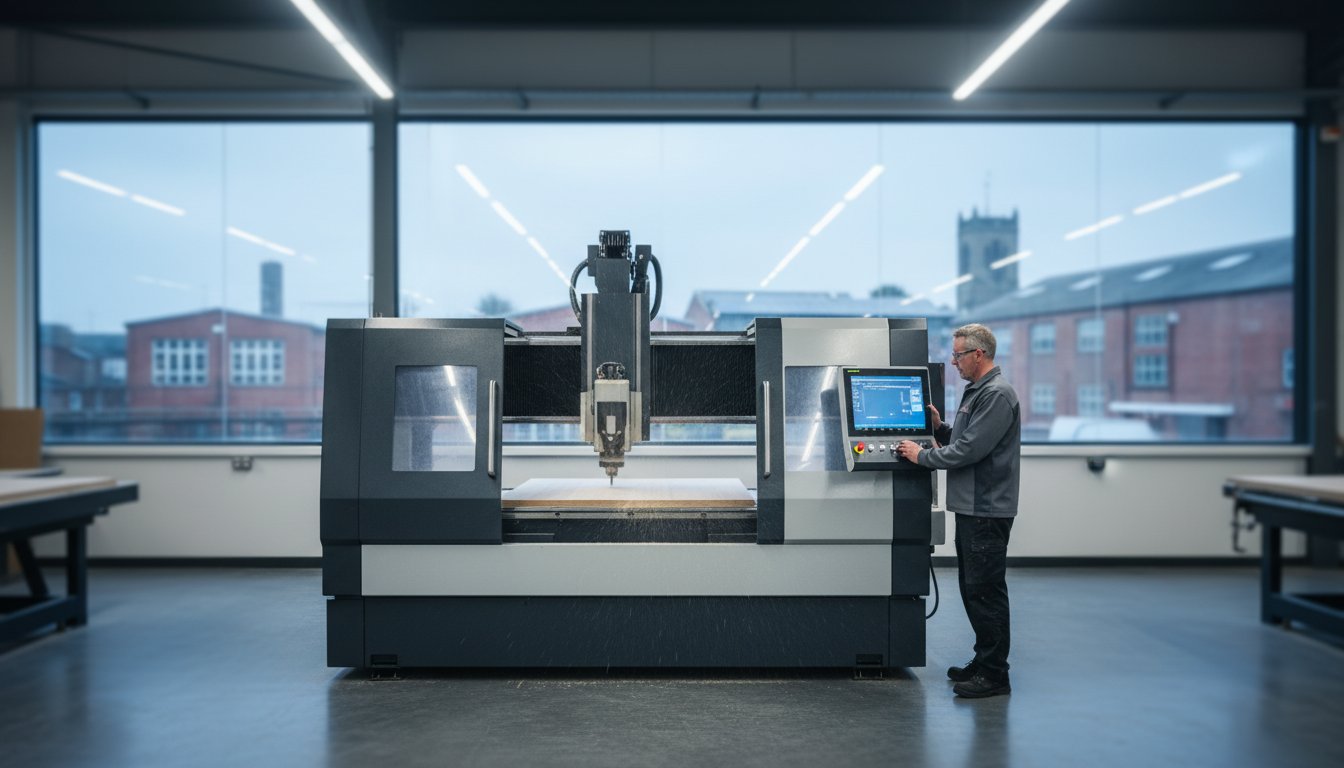
By the start of 2026, a UK workshop operating with decade-old machinery will face 22% higher energy costs and significantly more material waste than a modernised facility. It’s no longer just about cutting timber; it’s about surviving a market where skilled labour is at a 15-year low and electricity prices remain volatile. You’ve likely noticed that maintaining aging equipment is costing more in downtime than the machines are actually generating in profit. Investing in new woodworking machines UK is the most direct way to reclaim those margins and future-proof your business against these industrial shifts.
We’ve designed this guide to help you move beyond simple transactions toward a total production solution. You’ll learn how to integrate high-performance CNC technology and Swiss-engineered vertical panel saws that reduce waste by up to 15% per sheet. We’ll also break down the critical UK safety compliance standards and the after-sales service structures you need to ensure your investment delivers unrivalled value for years to come. From optimising workflow to securing reliable technical support, here is your roadmap for 2026.
Key Takeaways
- Understand the transition from standalone manual equipment to fully integrated, automated production cells to future-proof your manufacturing facility for 2026.
- Discover how to select the right new woodworking machines UK by comparing high-performance CNC machining centres with specialized joinery production lines from leading manufacturers.
- Learn to evaluate capital equipment using a criteria-based framework that prioritizes long-term durability, cast iron stability, and workflow optimization.
- Navigate essential UKCA compliance and HSE requirements for dust extraction and noise mitigation to ensure your workshop meets the latest safety standards.
- Gain peace of mind by leveraging expert-led technical support and seeing industrial machinery in action at our dedicated Newark-on-Trent showroom.
The Evolution of Industrial Woodworking Machinery in the UK
In 2026, industrial woodworking machinery represents more than individual cutting tools; it defines a connected ecosystem where precision engineering meets digital workflow. For a comprehensive overview of woodworking machinery, one must look at how these units have transitioned from basic mechanical devices into intelligent production nodes. Investing in new woodworking machines UK specialists provide is now a prerequisite for joinery firms aiming to maintain a 25% gross margin in a market where material costs have fluctuated significantly since 2024. Modern machines are no longer standalone assets. They are integrated components of a larger manufacturing strategy designed to deliver total solutions for the workshop floor.
UK workshops face a persistent shortage of bench joiners. The Construction Industry Training Board (CITB) projected a deficit of 30,000 skilled workers reaching into 2026. Technology bridges this gap. Integrated production cells allow a single operator to manage tasks that previously required three specialists. Automation ensures that high-end output remains consistent, regardless of the individual operator’s experience level. By moving away from manual setups, businesses secure their production capacity against the volatile labour market. This shift toward automated workflows allows for predictable lead times and repeatable quality that manual processes can’t match.
Key Market Trends for 2026
- Bespoke Automation: High demand for custom window and door production has led to the adoption of automated profiling lines. These systems reduce setup times by 45% compared to 2022 standards.
- Smart Workshops: Approximately 40% of new UK workshop installations now feature IoT-enabled monitoring. This allows owners to track spindle hours and tool wear via mobile interfaces, preventing unplanned downtime.
- Sustainability Standards: New regulations introduced in 2025 require machinery to meet strict energy consumption tiers. Sustainability is now a core procurement metric rather than an afterthought.
Why “New” Trumps “Used” for High-Volume Production
Choosing new woodworking machines UK over second-hand alternatives is a decision rooted in long-term financial stability. Legacy equipment often lacks the IE3 or IE4 high-efficiency motors found in modern Swiss-engineered brands like Striebig. These advanced motors can lower annual electricity bills by up to £1,200 per machine in a high-volume setting. Reliability is the primary driver here. A new machine provides a level of engineering excellence that used equipment, with its unknown service history, simply cannot guarantee.
Software compatibility is another critical factor. Modern CNC interfaces are essential for seamless integration with current CAD/CAM software versions. Many software providers stopped supporting hardware manufactured before 2018, leaving owners of older machines unable to update their design capabilities. Furthermore, business insurance providers have tightened their requirements. Many now offer 15% lower premiums for workshops utilizing new machinery equipped with integrated safety braking systems and full manufacturer warranties. This peace of mind, combined with UK-wide service support, ensures that a capital investment remains an asset rather than a liability. New machinery delivers the durability and technical integrity required for the 2026 manufacturing environment.
Core Technologies: From CNC Centres to Production Lines
The acquisition of new woodworking machines UK workshops require in 2026 focuses on two primary metrics: precision and throughput. Masterwood remains the benchmark for high-performance CNC machining in the British market, primarily due to its reputation for structural rigidity and intuitive interface. These machines aren’t just tools; they’re the central nervous system of a modern facility. For businesses moving beyond standalone units, the integration of Soukup production lines represents a shift toward total automation. These systems handle complex window and door joinery with a level of repeatability that manual processes can’t match, ensuring every component meets the rigorous standards set by the British Woodworking Federation (BWF).
CNC Machining and Workflow Optimization
Choosing between a 3-axis and 5-axis CNC platform depends entirely on your product complexity. A 3-axis machine is the workhorse for panel processing and standard door sets, offering high speed at a lower capital entry point. However, 5-axis technology is now the 2026 standard for bespoke staircases and intricate architectural mouldings, as it eliminates multiple setups and manual handling. Modern software integration allows your CAD/CAM designs to flow directly to the factory floor, reducing the risk of human error by 40% in the initial programming phase. Nesting technology is the automated arrangement of parts on a single panel to achieve maximum material yield and reduce offcut waste. This process is essential for maintaining margins when timber prices fluctuate.
Specialised Joinery Production Lines
Soukup systems have redefined the timeline for window manufacturing. What used to take a skilled joiner four hours can now be completed in under 18 minutes using a fully automated line. This efficiency doesn’t sacrifice quality; it enhances it. Precision is particularly critical for glazing beads, where Copenstick technology ensures a perfect fit every time, removing the need for site-side adjustments. These modular production lines are designed for scalability. You can start with a foundational setup and add components as your contract volume increases. If you’re planning a workshop upgrade, you can view our latest technical specifications to see how these modules integrate into existing layouts.
Primary processing also requires a technical refresh. High-speed precision cross-cutting saws and industrial bandsaws are no longer just “roughing” tools. They now feature digital positioning systems accurate to 0.1mm, ensuring that the timber entering your CNC or production line is perfectly prepped, which prevents downstream jams and tool wear.
Sustainable Waste Management
In 2026, waste is a financial leak that most UK businesses can’t afford. Falach Briquette Presses allow you to convert sawdust and shavings into high-value fuel. With skip hire costs in the UK averaging £450 per lift in 2024, the logic of on-site recovery is undeniable. By compressing waste into briquettes, you’re not just reducing disposal fees; you’re creating a resource that can heat your workshop or be sold to the local domestic market for approximately £200 per tonne.
- Reduced Overheads: Eliminating three skip collections per month saves over £16,000 annually.
- Environmental Compliance: Meeting stricter UK carbon footprint regulations through wood waste recovery.
- Circular Workshop: Turning a byproduct of production into a primary source of factory heating.
Adopting a “Circular Workshop” philosophy isn’t just about being green. It’s about engineering a facility where every scrap of material contributes to the bottom line. This practical approach to sustainability ensures your business remains competitive and compliant as UK environmental standards continue to evolve.
Evaluating New Woodworking Machines: A Comparison Framework
Selecting new woodworking machines UK manufacturers rely on involves more than comparing sticker prices. It requires a disciplined, criteria-based framework that separates short-term savings from long-term profitability. A machine is a 20-year asset; therefore, the evaluation must focus on engineering integrity and technical capacity rather than just initial capital outlay. We prioritize a methodology that weighs structural mass, component origin, and verifiable throughput data.
The core of this framework rests on the distinction between hobbyist equipment and industrial-grade hardware. High-volume workshops cannot afford the hidden costs of vibration, misalignment, or frequent recalibration. By establishing strict benchmarks for build quality and financial return, you ensure that every pound spent contributes to a more stable and efficient production line.
Build Quality and Engineering Standards
Swiss and European engineering remains the global benchmark for woodworking longevity. The difference lies in the materials. Industrial-grade machines utilize heavy, stress-relieved cast iron for tables and internal supports. This mass is vital for vibration dampening. A machine with high structural mass reduces resonance by up to 40% compared to lightweight steel alternatives, directly improving the quality of the final finish and extending the life of your tooling.
When inspecting potential investments, look for “industrial-grade” markers. This includes dust-sealed SKF bearings, precision-ground spindles, and induction-hardened linear guides. These components ensure the machine maintains 0.1mm tolerances even after a decade of three-shift operation. Safety is equally paramount. All equipment must align with UK Health and Safety Executive (HSE) standards to ensure operator protection and legal compliance within the British workplace.
ROI and Financial Planning
The “Total Cost of Ownership” (TCO) calculation is the only accurate way to measure value. This formula includes the purchase price, energy consumption, maintenance costs, and the cost of potential downtime. A cheaper machine that requires monthly repairs or lacks precision often costs 50% more over its lifespan than a premium alternative. Payback periods should be calculated based on increased throughput speeds. If a new vertical panel saw reduces processing time by 15 minutes per sheet, the labor savings alone can often cover the monthly finance cost.
UK businesses have a distinct advantage through tax incentives. The “Full Expensing” capital allowance, which was made permanent in the 2023 Autumn Statement, significantly accelerates ROI by providing immediate tax relief on qualifying new woodworking machines UK companies purchase. This allows you to deduct 100% of the investment from your taxable profits in the year of purchase, effectively providing a tax saving of up to 25p for every £1 spent. It’s a powerful tool for modernising a workshop while protecting cash flow.
The primary objection to new machinery is the price premium. However, justifying this cost is straightforward when you look at precision and waste. Modern machines reduce material waste by an average of 12% through better nesting and cleaner cuts. Precision is profit. When a machine produces perfect components every time, you eliminate the “re-work” that drains workshop margins. Investing in new equipment isn’t just about getting a new tool; it’s about securing the technical integrity of your entire workflow.
UK Compliance and Technical Support Requirements
The regulatory landscape for 2026 requires absolute clarity for any business owner. All new woodworking machines UK workshops procure must carry the UKCA mark for the Great Britain market. While the UK government has extended the recognition of CE marking for various product sectors, industrial machinery under the Supply of Machinery (Safety) Regulations 2008 remains subject to strict oversight. Ensuring your equipment meets these standards is a prerequisite for both insurance validity and HSE compliance. Buying from a specialist ensures that technical files and declarations of conformity are verified against the latest safety protocols, preventing the legal risks associated with non-compliant imports.
The distinction between a transactional purchase and a long-term partnership becomes clear when a machine requires service. Industrial customers often fall into the trap of “box-shifting” retailers who offer lower upfront prices but maintain zero UK stock of critical consumables or spare parts. If a drive belt snaps or a sensor fails, waiting 14 days for an international shipment is an unacceptable risk. We maintain a comprehensive inventory of genuine parts for prestige brands, ensuring your investment remains a functioning asset. Relying on a retailer without a dedicated UK warehouse for spares is a gamble that rarely pays off when production deadlines loom.
Health, Safety, and Extraction
HSE inspectors prioritize Local Exhaust Ventilation (LEV) performance during workshop audits. A new machine shouldn’t just fit your floor space; it must integrate with your existing extraction system without compromising the 20 metres per second minimum air speed required for hardwood dust. High-speed industrial moulders frequently exceed 85 dB(A), which makes integrated acoustic enclosures a necessity rather than an option. We recommend 14-month LEV testing intervals to meet COSHH requirements. This proactive approach protects your workforce from fine particulate matter and keeps your business on the right side of the law.
The Importance of On-site Technical Service
Remote diagnostics have their place, but they’re never a substitute for a physical engineering presence. When a vertical panel saw or CNC centre experiences even a 1% deviation in precision, a phone call can’t recalibrate the hardware. Production downtime costs the average UK joinery shop approximately £500 per hour in lost revenue. A UK-wide engineering team provides the stability needed for complex mechanical alignments and software integration. Routine maintenance schedules, typically performed every 2,000 operating hours, prevent 85% of common component failures before they halt your production line.
Operator training is the final pillar of technical support. Safety guarding standards and emergency stop configurations are only effective if the person behind the machine understands the “why” behind the “how.” Comprehensive commissioning includes hands-on training that covers everything from basic safety to advanced workflow optimization. This ensures your team maximizes the potential of your new woodworking machines UK investment while maintaining a zero-accident environment. Choosing a partner who prioritizes this level of detail ensures your workshop operates at peak efficiency from day one.
Ensure your workshop meets the highest standards of safety and performance. Contact our technical team for a compliance audit and machinery consultation today.
The IWM Approach: Your Partner in Joinery Excellence
Choosing the right equipment is a capital-intensive decision that dictates your workshop’s profitability for the next decade. At International Woodworking Machinery Ltd, we leverage over 50 years of industry expertise led by Ian Brown to ensure your investment is sound. We don’t believe in “box shifting” or aggressive sales targets. Our focus remains on engineering excellence and providing a total solution that integrates seamlessly into your existing production line. Our Newark-on-Trent showroom serves as a technical hub where business owners witness industrial machinery in action. It’s not enough to read a specification sheet; you need to see how a machine handles under load. We provide tailored technical advice that matches specific machines to your unique production challenges, whether you’re looking for high-speed edgebanding or complex CNC machining.
Our consultative process begins with a deep dive into your current workflow. We identify bottlenecks, such as slow manual processing or high waste rates, and propose machinery that offers a measurable return on investment. By focusing on long-term value rather than just the initial price tag, we help UK joinery firms scale their operations with confidence. This methodical approach is why we’ve become a trusted partner for businesses across the country looking for new woodworking machines UK. We bridge the gap between high-end international manufacturing standards and the personalized service that British craftsmen expect.
- Expertise: Half a century of hands-on experience in industrial woodworking.
- Precision: Machines selected for their engineering integrity and durability.
- Consultation: We match the technology to your specific production goals.
- Stability: A family-led business with a reputation for reliability.
Visit Our Demonstration Area
Seeing is believing in the world of industrial engineering. We encourage clients to bring their own materials for a comprehensive “test run” at our Newark facility. This practical exercise is essential because it demonstrates how our Masterwood and Soukup technologies process your specific timber or panel stock. You’ll see the finish quality and speed firsthand, removing any guesswork from the purchasing process. Our expert-led walkthroughs provide a granular look at the software interfaces and mechanical components that drive these systems. Our central location in Newark provides easy access via the A1 and the East Coast Main Line, making it a convenient destination for workshops from Scotland to the South Coast.
The IWM Service Guarantee
The sale is only the beginning of our relationship with your business. We’re committed to UK-wide breakdown response and maintenance to ensure your production never grinds to a halt. Our service engineers are factory-trained specialists who understand the intricate mechanics of every machine we supply. We maintain an extensive inventory of over 5,000 genuine replacement parts in our UK warehouse, allowing for rapid dispatch when every hour of uptime counts. This robust support network is designed to give you total peace of mind, knowing that expert help is always a phone call away. If you’re ready to upgrade your facility, view our full range of new woodworking machinery to see how we can support your growth.
Securing Your Workshop’s Competitive Edge for 2026
Investing in new woodworking machines UK requires more than a simple capital outlay; it’s a strategic commitment to workflow optimization and engineering precision. The transition toward integrated CNC centres and automated production lines is now essential for joinery firms aiming to maintain high-output standards. Success depends on balancing advanced hardware with rigorous UK HSE compliance and reliable technical support that protects your long-term investment.
IW Machines leverages over 50 years of industry experience to provide total manufacturing solutions rather than just hardware. We’re the exclusive UK supplier for prestige brands like Striebig, ensuring your workshop benefits from Swiss engineering excellence and unrivalled durability. Our specialist UK service engineering team provides the peace of mind needed to keep your production lines running at peak efficiency. We’re ready to help you navigate the technical complexities of modern machinery to ensure your business thrives in an increasingly demanding market.
Book a technical demonstration at our Newark showroom to see these precision systems in action. Let’s build your future production capacity together.
Frequently Asked Questions
What are the main benefits of buying new woodworking machines over used?
New machines provide manufacturer warranties, the latest safety features, and 20% better energy efficiency on average compared to models from a decade ago. Buying new woodworking machines UK ensures you benefit from modern CNC integration and precision that older units often lack. Used equipment frequently carries hidden repair costs that can exceed 35% of the initial purchase price within the first 12 months of operation. New models provide 100% reliability for demanding production schedules.
How do I ensure a new machine meets UK health and safety regulations?
Every machine we supply carries the UKCA mark and complies fully with the Provision and Use of Work Equipment Regulations 1998 (PUWER). We ensure each unit meets the BS EN ISO 19085 series of standards for woodworking machine safety. Our engineers conduct a thorough safety briefing and compliance check during the installation process. This rigorous approach guarantees your workshop remains compliant with Health and Safety Executive (HSE) inspections from the day of commission.
Can I see the machines in operation before I purchase?
You can book a live demonstration at our central UK showroom or arrange a visit to an existing customer site to see our machines in a live production environment. We currently have 12 different models available for immediate demonstration, including Striebig vertical panel saws. Seeing the equipment handle your specific materials provides the technical assurance required for a capital investment. Seeing the build quality firsthand helps justify a spend of £15,000 or more.
Do you provide installation and operator training for CNC machines?
We provide a comprehensive installation package that includes three days of onsite operator training for all new CNC machinery. Our specialist engineers handle the physical setup and software integration to ensure your workshop’s workflow remains uninterrupted. We cover everything from basic tool pathing to advanced maintenance protocols. This structured training program typically reduces the initial learning curve by 45% for your technical staff, ensuring faster returns on your investment.
What is the typical lead time for a new window production line?
The typical lead time for a bespoke window production line ranges between 18 and 26 weeks from the date of order confirmation. This timeframe accounts for custom engineering, factory testing, and shipping to your UK facility. We provide a detailed project timeline within 72 hours of receiving your initial deposit. Our project managers coordinate every stage of the delivery to ensure your floor space is prepared for the arrival of the new system.
How does a wood briquette machine improve workshop profitability?
A wood briquette machine converts waste offcuts into a secondary revenue stream, potentially adding £250 in profit per tonne of processed waste. By reducing skip hire costs by up to 75%, these machines often achieve full capital payback within 22 months. You can sell the compressed briquettes to the domestic heating market or use them to heat your own factory. This process significantly lowers annual utility bills while solving a waste management challenge.
Do you offer financing or leasing options for new industrial equipment?
We offer flexible leasing and hire purchase options through our panel of specialist industrial finance partners. Rates currently start from 4.9% APR for established businesses, with terms ranging from 24 to 72 months. Financing allows you to acquire new woodworking machines UK without depleting your essential cash reserves. We can provide a tailored quote that includes the machine, delivery, and installation costs in a single, fixed monthly payment.
What kind of after-sales support can I expect for my new machine?
Our after-sales support includes a minimum 12-month parts and labour warranty followed by access to our UK-wide network of field service engineers. We maintain a £450,000 inventory of genuine spare parts in our warehouse to ensure 24-hour dispatch for all critical components. Our technical helpdesk provides immediate phone support for software or mechanical queries. This commitment to long-term reliability protects your production uptime throughout the machine’s entire lifecycle.