Woodworking Machines > Wide Belt Sanders > Wide Belt Sanders Range

Wide Belt Sanders Range

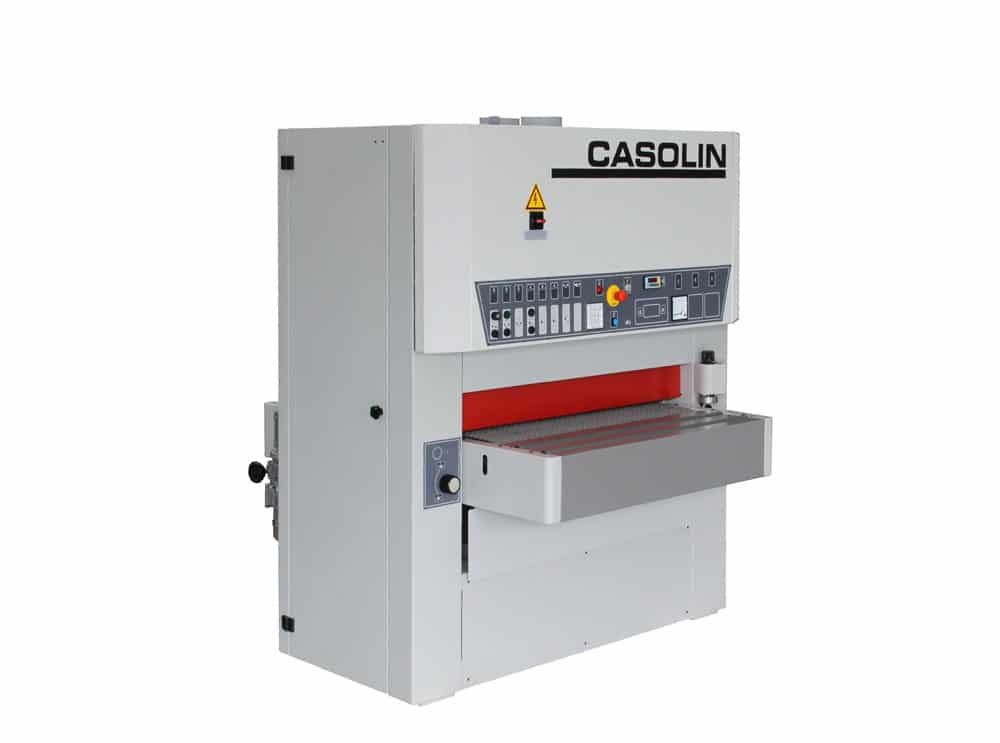
Casolin
Whether you're finishing flat panels in volume, calibrating solid timber, or sanding complex moulded profiles, there is a wide belt sander configuration that suits your output. IWM can help you identify the right type and spec before you commit.

Typically chosen by

  • Joinery and furniture manufacturers needing consistent, repeatable surface finishes across large batch runs
  • Timber processors and panel shops running continuous production who need a through-feed solution that keeps pace with output
  • Bespoke workshops producing shaped or moulded components that standard flat-bed sanders cannot handle

Key specification considerations

Machine Types Available
Belt, Through-Feed, Drum, Profile
Each type suits a different combination of workpiece geometry, surface quality requirement, and production volume — IWM can help you identify which is appropriate for your application.
Working Width
Varies by model — typically 630 mm to 1,300 mm
Working width determines the maximum panel or board width you can process in a single pass — confirm your widest workpiece before specifying.
Feed Speed
Varies by model — typically 2.5 to 18 m/min (variable)
A variable-speed conveyor lets you slow the feed for fine finishing grits or push the rate for calibration passes, without changing the machine.
Power Requirement
Varies by model — three-phase supply required for most industrial configurations
Phase and amperage will vary by model — confirm your supply before specifying.
SpecificationValueNotes
Machine Types Available
Belt, Through-Feed, Drum, Profile
Manufacturer
Multiple manufacturers available — contact IWM to discuss current stock and sourcing
Working Width
Varies by model — typically 630 mm to 1,300 mm
Confirm your widest workpiece dimension before specifying; working width defines the maximum single-pass coverage.
Feed Speed
Varies by model — typically 2.5 to 18 m/min, variable
Variable feed speed allows the machine to be tuned for material density and abrasive grit, which directly affects finish quality and belt life.
Belt Speed
Varies by model — contact IWM for model-specific data
Max Workpiece Thickness
Varies by model — typically up to 160–170 mm
Min Workpiece Thickness
Varies by model — typically from 3–5 mm
Minimum thickness is a critical check for veneer, thin panels, or laminated components — confirm with IWM before ordering.
Motor Power
Varies by model — contact IWM for model-specific data
Confirm three-phase supply availability and amperage headroom before ordering.
Dimensions (L × W × H)
Varies by model — contact IWM for model-specific footprint data
Allow additional clearance for infeed, outfeed, and extraction ducting when planning floor space.
Weight
Varies by model — contact IWM for model-specific data
Heavier industrial models may exceed 500 kg — floor loading capacity should be checked with your building surveyor before installation.
Dust Extraction Connection
Fitted as standard on all models — connection size varies; confirm with IWM
Adequate extraction is essential for finish quality, belt life, and compliance with UK workplace dust regulations — size your extraction system to the machine's stated extraction volume.
Noise Level
Varies by model — contact IWM for model-specific data
Levels above 80 dB may require acoustic treatment or hearing protection under UK workplace regulations.
CE / UKCA Marked
Yes — all machines supplied by IWM meet current UK/EU machinery safety requirements
UKCA or CE marking confirms the machine has been assessed against relevant machinery safety directives, which is a legal requirement for use in UK workplaces.

Is this the right
machine for you?

Choose the Wide Belt Sanders Range if...

  • You need to match a sander type precisely to your workpiece profile, whether flat panels, moulded sections, or variable-thickness components
  • You are scaling up production and need a through-feed configuration that integrates with an existing line
  • You want to discuss the full range of options with a specialist before committing to a machine type

Consider an alternate model if...

  • Your volume is low or intermittent — a narrower single-phase machine such as the Libra 35 entry configuration may be more cost-effective for your workload than a full industrial through-feed setup
  • Your workpieces are small or irregular in a way that wide belt processing is not suited to — a stroke sander, edge sander, or orbital finishing machine may be more appropriate
  • You are primarily working with shaped or profiled sections rather than flat faces — a dedicated profile sander or brush sander unit is likely a better fit than a wide belt configuration
Still not sure? We're happy to help
Ready when you are

Ready to improve your
workshop's output?

Book a specification call with one of our engineers. Thirty minutes, no obligation, plain English advice on what would actually work on your floor.